I’ll be honest, before I took my first high speed train in China, I was a little intimidated. A new country, a massive rail network, everything in Mandarin. Would I end up on the wrong train? At the wrong station? Heading to the wrong city entirely?
Spoiler: none of that happened. What did happen was one of the smoothest, most impressive travel experiences of my life. And now, after riding the rails from Shanghai to Beijing and through the stunning Sichuan-Chongqing corridor, I’m here to tell you: China’s high speed trains are genuinely one of the best ways to travel in the world – and you absolutely need to experience them.
Here’s everything you need to know before you go.
How to Book: Skip the Stress, Use Klook
China’s official rail booking platform app (12306) doesn’t easily accept foreign credit cards, and was a genuinely frustrating experience for me, an international traveller. You can book in person at the station, but then I would not recommend that as there might be no availability, and you’ll be hoping someone speaks enough English to help.
The easiest option by far? Book through Klook.
Step 1: Search up destination + intended travel date
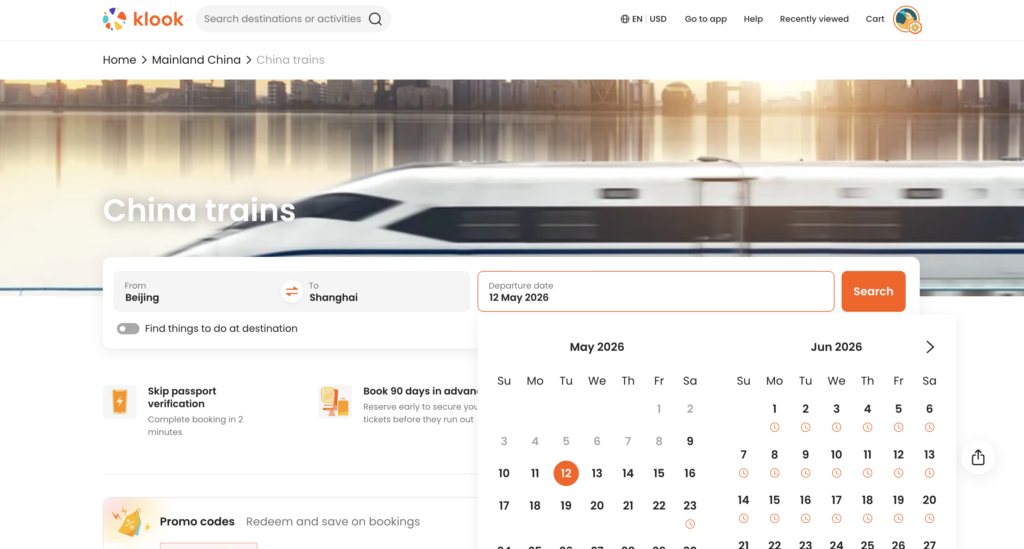
You will see that train which are 14 days after your search date will have a little clock signage below those dates. This means that Pre-sale reserving tickets before official sales open. Klook will book the tickets once available (usually 2 weeks) and send you a confirmation once done. They say that is it subject to availability but usually I’ve never had any issues with not getting tickets.
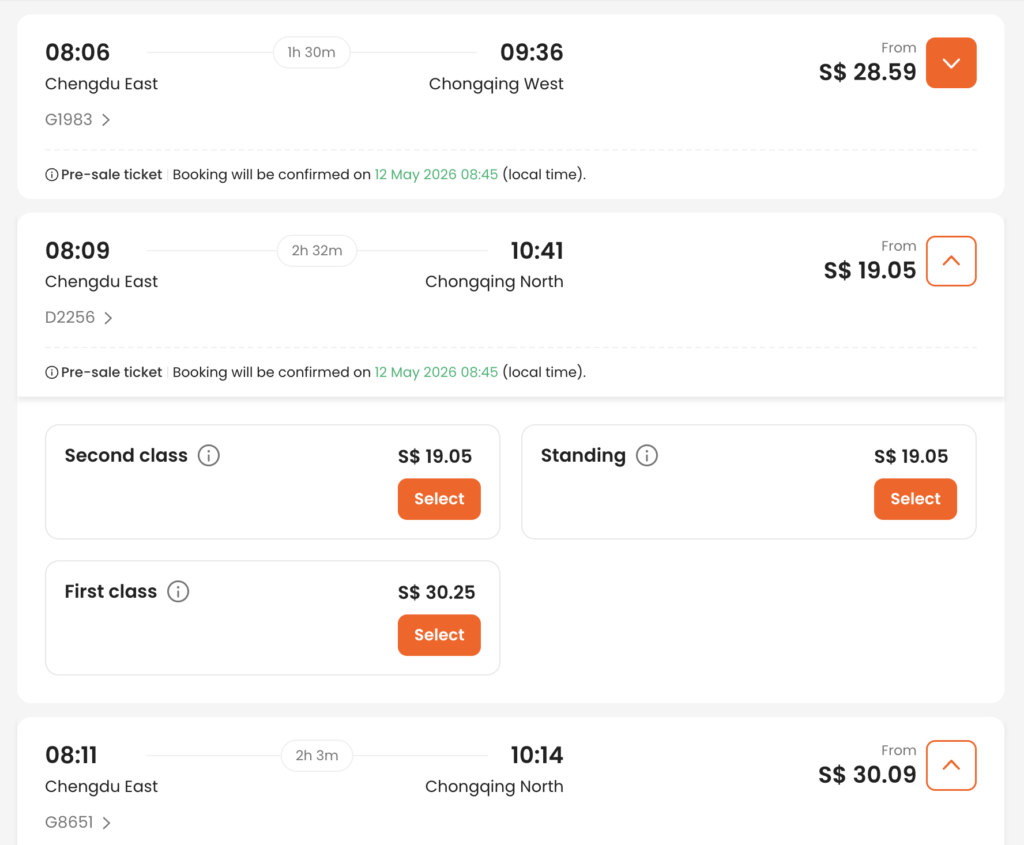
Then you’ll be able to choose your timings, prices vary depending on the times you choose. Popular routes has MANNYYY trains departing in one day. Remember to check your start and end locations as some cities have more than 1 station!
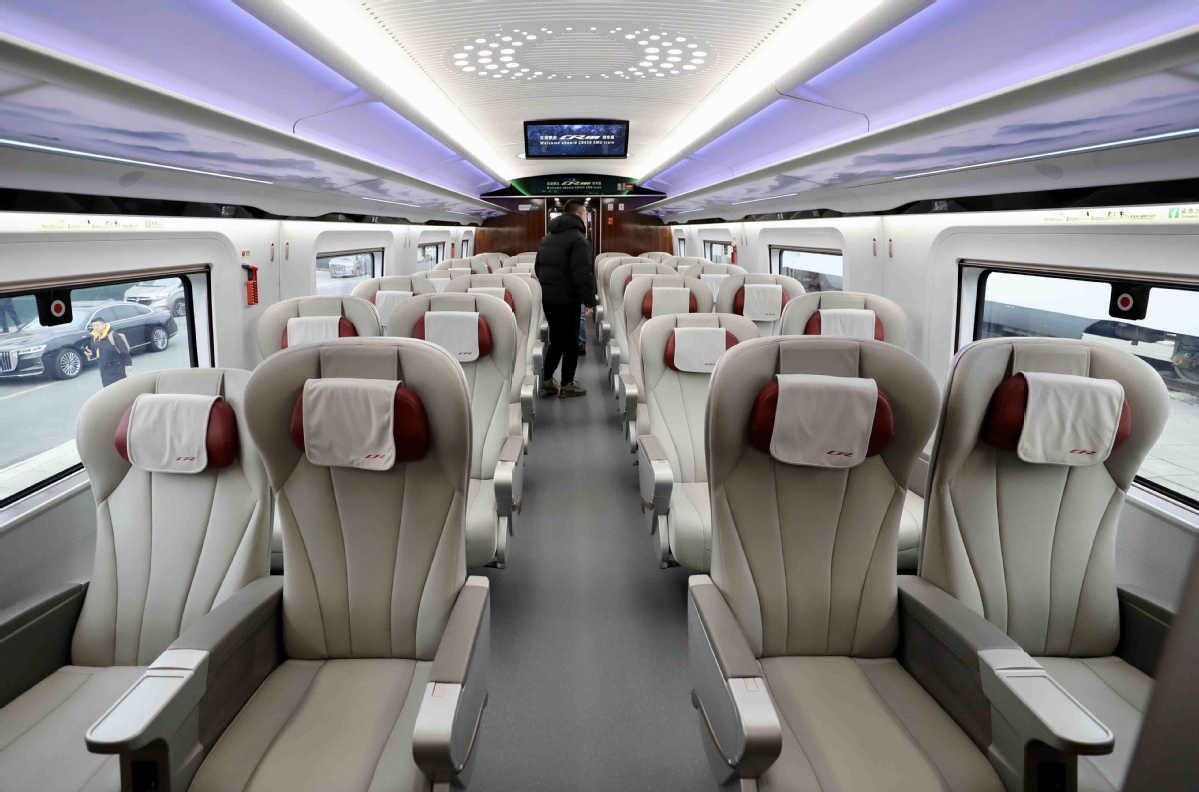
You’ll also be able to choose the type of seat you’d like. Personally I find both second and first class pretty comfortable. Some trains also have Business class options. Here are some images below:
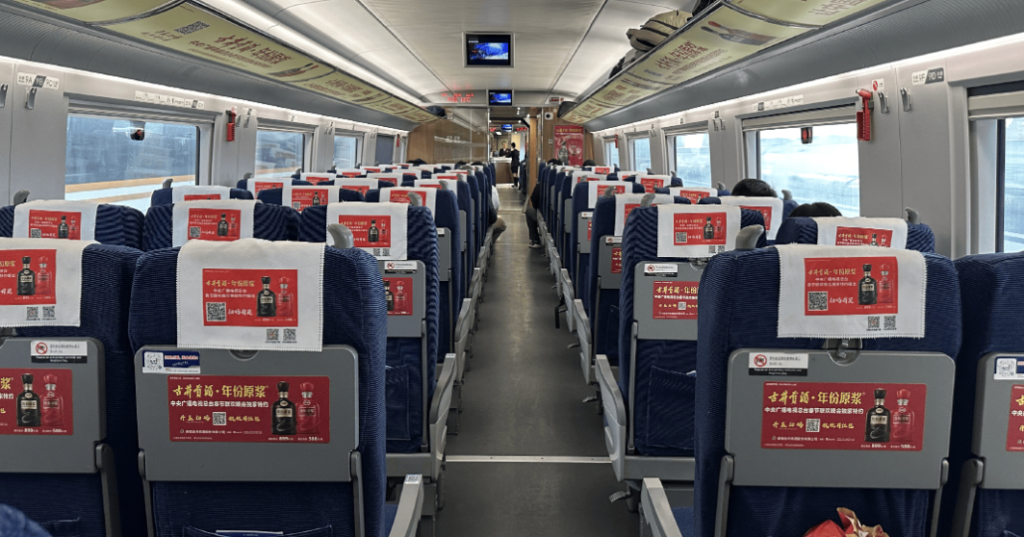
Second Class (二等座): 3+2 layout. The standard option. Power outlets, and plenty of legroom. Honestly, it’s better than economy on most flights.
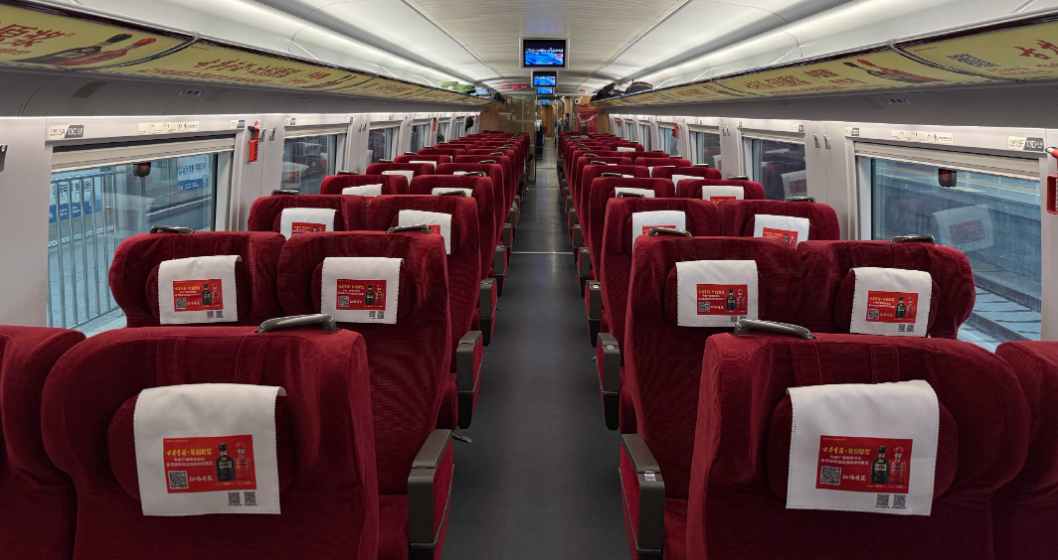
First Class (一等座): 2+2 layouts. Wider seats, more space, worth it for longer journeys like Shanghai–Beijing if you want to stretch out.
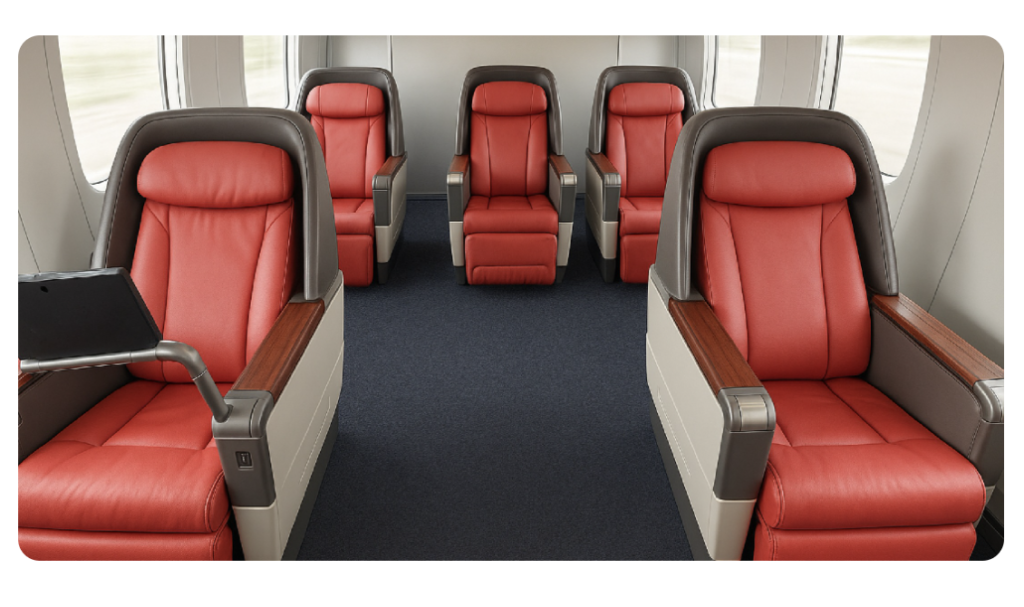
Business Class: Fully reclining seat
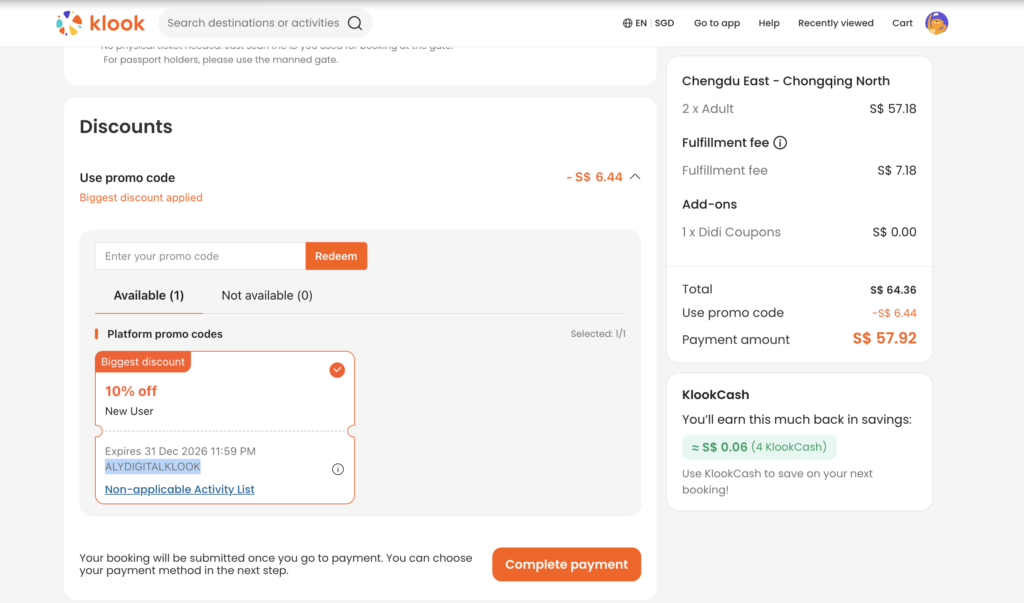
You will then be brought to the check-out page, there is a small fulfillment fee, but fret not! You can use my code: ALYDIGITALKLOOK to get 5-10% off your booking!
Tip: make sure to key in your personal particulars correctly, especially your passport details. At the train station, your passport IS YOUR TICKET. They will scan your passport to let you in.
I use Klook for all my China train bookings and it genuinely takes the hassle out of the whole process.
What to expect when you reach the Train Station
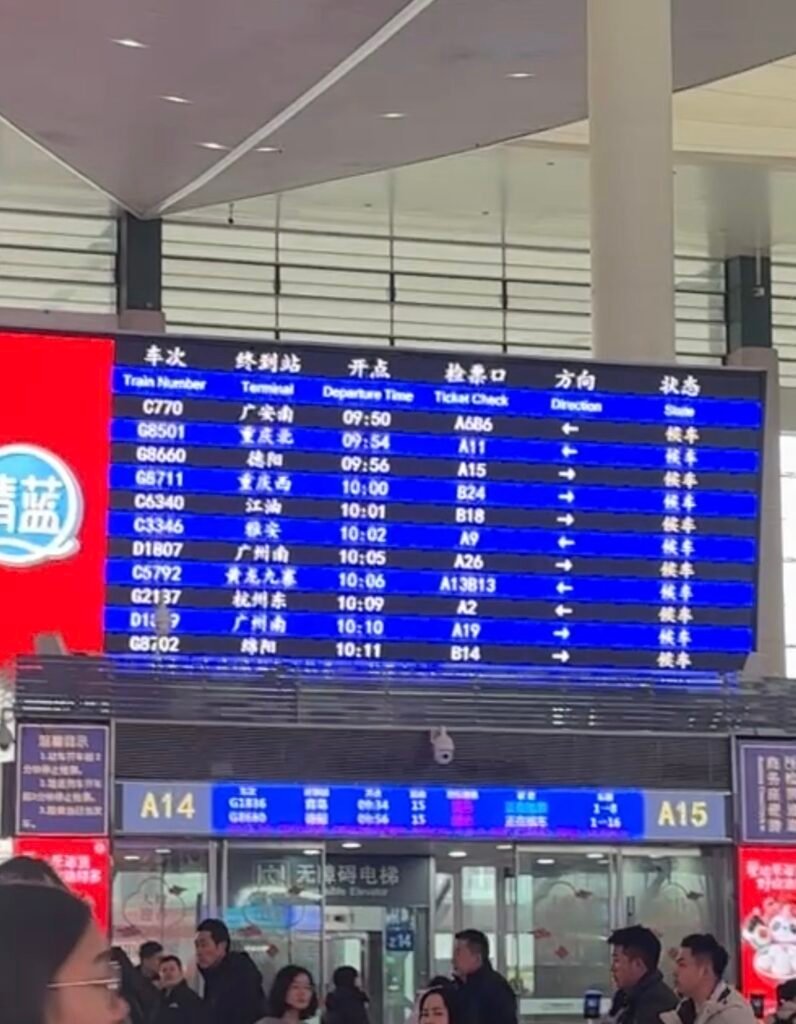
I’d recommend arriving at least 45mins – 1hr before your train especially if its your first time, in case you lose your way / face any issues.
The boards which shows all the train informations may not have ENGLISH written. So, keep track from your Klook Account what your TRAIN NUMBER is, you should refer to that to find your gate number. As seen in the picture above, your gate number is called “ticket check”, as that’s where you scan your passport (which is your tickets!!). You can see above an example of how a gate will look like (A14 and A15)
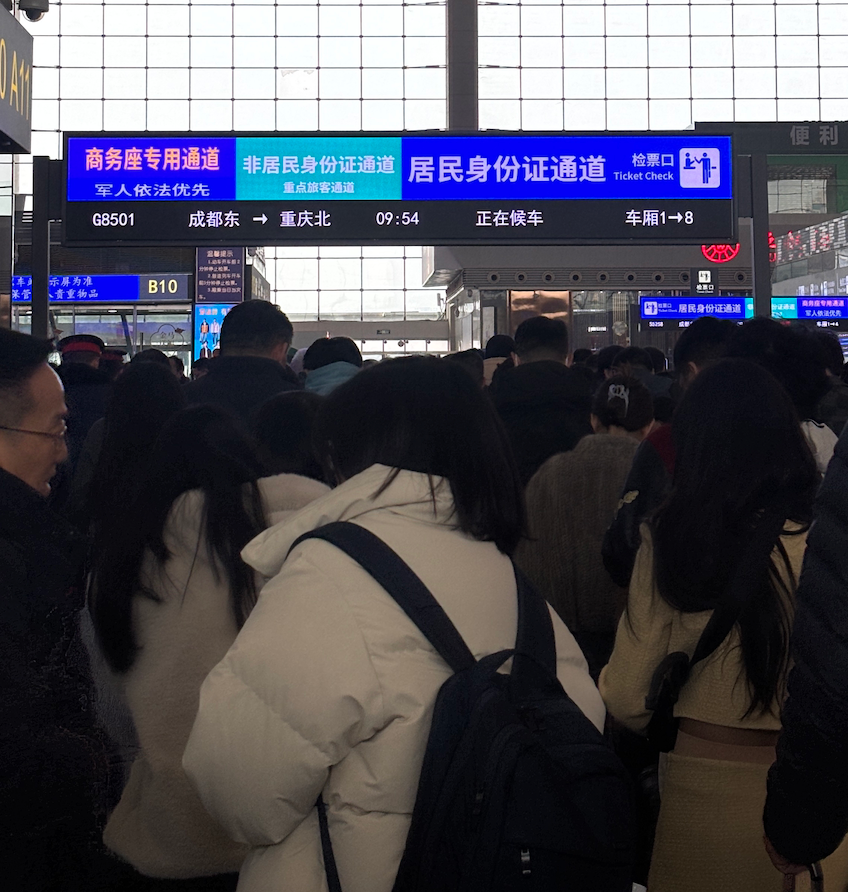
Of the stations I’ve been to, there has been 2 “checkpoints” where you’ll have to scan your passport.
- Once when you first enter the train station
- Second time when you’re queuing at your gate before going to your train
There are automated gates (which the Chinese locals can use) as they are scanning their ID cards, and there are also manual scans by the staff there for all you PASSPORT HOLDERS! So always just walk over to queue where there’s staff member manually scanning.
In the picture above, the manual scanning queue at the gate is the turquoise board, (its not in english) but honestly people will just queue anywhere, so just be patient and wait your turn, when you get to the front just show the staff that you have a passport and they will manually help to scan you in!
Why Take the High Speed Train in China?
Let’s start with the obvious question: why train over plane?
China has built the largest and busiest high speed rail network on the planet — over 45,000 kilometres of track connecting more than 550 cities. These bullet trains hit speeds of up to 350 km/h (217 mph). That’s not just fast for a train — that’s faster than most of us will ever travel on land in our lifetimes.
But beyond the wow factor, here’s why it practically makes sense for travellers:
- City-centre to city-centre. Train stations are in the heart of cities. No 90-minute airport transfer, no 2-hour check-in buffer. You arrive, board, and go.
- More comfortable than flying. Wider seats, room to walk around, no pressure changes, no middle seat nightmares.
- Reliable and punctual. I’ve never had a delayed high speed train in China. Not once.
- Scenic. On the Chengdu–Chongqing leg, I had my face pressed to the window for most of the ride. Mountains, valleys, rice terraces — it’s stunning.
- Surprisingly affordable. Especially if you book in advance and grab a discount.
Tips for First-Time Riders
1. Bring your passport. Foreign travellers board using their passport. You’ll need it at the security gate and again to collect or validate your ticket.
2. Arrive early. Give yourself at least 45 minutes before departure. Stations can be large.
3. Know your station. Many Chinese cities have multiple train stations. Shanghai has Hongqiao and Shanghai Station. Beijing has Beijing South (for most HSR) and Beijing West. Always double-check you’re going to the right one.
4. Book in advance for peak season. During Chinese national holidays (Golden Week in October and Chinese New Year in January/February), trains sell out fast. Book as far ahead as you can.
5. Download Klook before you travel. It makes booking and managing tickets so much easier from your phone, especially when you’re on the go.
6. Relax and enjoy it. Seriously. This is one of the great travel experiences. Put your phone down (after taking photos) and just appreciate the fact that you’re hurtling across China at 300 km/h in a seat more comfortable than most long-haul flights.
Popular High Speed Rail Routes to Know
| Route | Approx. Time | Why Go |
|---|---|---|
| Shanghai → Beijing | ~4.5 hrs | The classic. Two of China’s greatest cities. |
| Chengdu → Chongqing | ~1.5 hrs | Pandas + noodles + river city. |
| Beijing → Xi’an | ~4 hrs | Terracotta warriors awaits. |
| Guangzhou → Hong Kong | ~1 hr | Cross-border with ease. |
| Shanghai → Hangzhou | ~45 mins | West Lake and tea plantations. |
Final Thoughts
China’s high speed rail network is one of those things that genuinely changes how you see travel. It’s fast, comfortable, reliable, scenic, and, when you use the right platform and a discount code very affordable.
If you’re visiting China, don’t just use it as a way to get between cities. Make the journey part of the experience. Grab a window seat, watch the landscape change, and appreciate the engineering marvel you’re riding on.
Ready to book? Head to Klook and use code ALYDIGITALKLOOK at checkout for 5–10% off your China high speed rail tickets.
Have questions about taking the train in China? Drop them in the comments below — I’m happy to help!
[Pin this post for later!]
Tags: China travel, high speed rail, China train, Klook, travel tips, Asia travel, budget travel, Beijing Shanghai train, Chengdu Chongqing
Categories: Asia Travel, Travel Tips, Transportation
Disclosure: This post contains affiliate links. If you book through my Klook code, I may earn a small commission at no extra cost to you. I only recommend things I’ve personally used and love and I genuinely love China’s trains.